
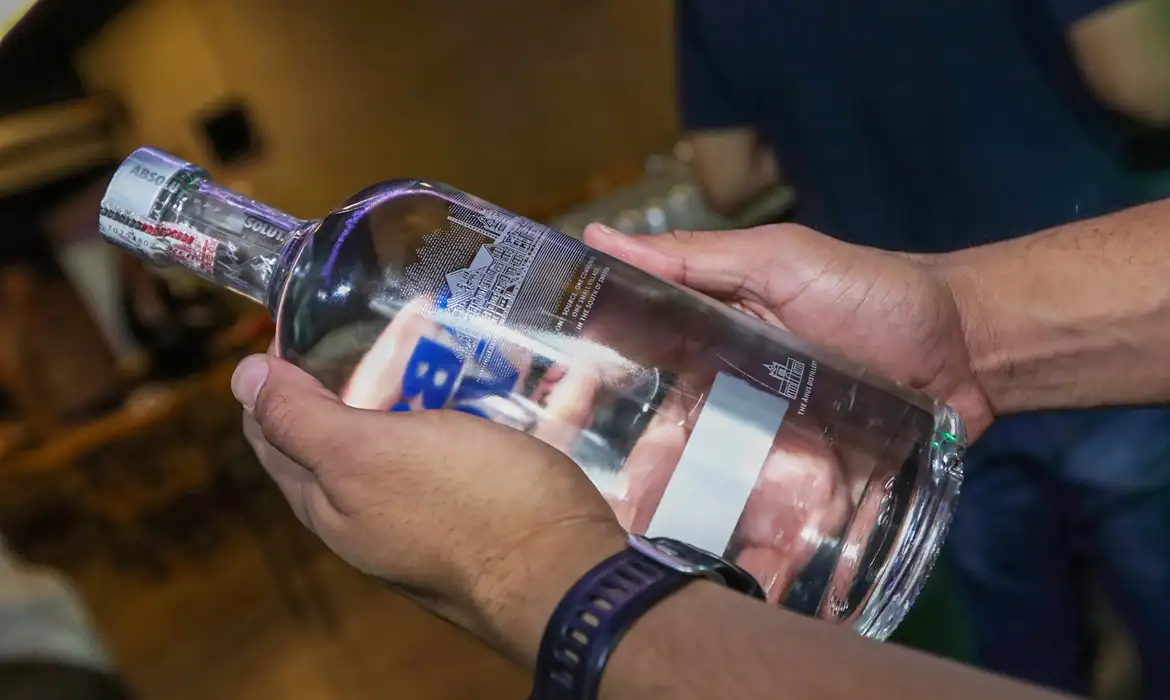
The bill that will define the rates for the Selective Tax (IS) will introduce two rates, to be applied simultaneously to alcoholic beverages. According to a member of the Ministry of Finance interviewed by JOTA, a percentage will be charged per liter of pure alcohol present in the beverage, plus an additional rate, which may be a single rate or vary according to the alcohol content. A final decision has not yet been made regarding the latter point – however, the Ministry of Health is in favor of a single rate.
The tax on alcoholic beverages is one of the sticking points related to the regulation of the IS (Stamp Duty). Complementary Law 214/25 provides for the application of an ad valorem tax rate and a specific tax rate on products and cigarettes. However, the final model still needs to be designed by the Executive branch and then passed by the Legislative branch.
The Selective Tax will begin to be levied on goods and services that are harmful to health and the environment starting January 1, 2027. However, the tax rates must be defined by Congress, which depends on the government submitting a proposal.
The Finance Ministry official highlighted that the definition of the percentages is already well advanced within the Executive branch, and the timing of the submission depends on a political assessment. In short, there are conditions to submit the proposal in the first half of the year, but the government needs to decide if this is a good time. The tax agenda has been dominating the opposition's discourse, and there is a risk that the IS (Stamp Duty) project will be used to support the narrative that tax increases are one of the pillars of the current government.
On the other hand, the delay in sending the proposal reduces the time available for Congress to analyze it and raises concerns regarding prior approval. The Selective Tax is subject to a 90-day waiting period, which means that, to take effect on January 1, 2027, the bill with the tax rates needs to be in force by the beginning of October, a few days before the first round of elections, which increases the chances of the text being submitted via provisional measure.
The non-implementation of the IS (Stamp Duty) on January 1st would, in practice, mean a tax exemption for goods and services that will be subject to the tax, since the IPI (Tax on Industrialized Products) will be zeroed for most products from that date. Without specifying which ones, the Finance Ministry representative stated that there are measures that can be applied to mitigate the fiscal impact in this case.
Regarding beverages, a tiered selective tax rate will be implemented, with a gradual increase starting in 2029 following the reduction in ICMS (state sales tax). This is because, currently, the state tax also serves a selective function. The same logic will be applied to sugary drinks and cigarettes.
One of the main points of disagreement between the ministries in drafting the proposal to be sent to the Legislature concerns vehicles, whose Selective Tax rate will vary depending on factors such as manufacturing stages in Brazil, recyclability of materials, and carbon footprint. The major debate between the Ministry of Finance and the Ministry of Development, Industry, Trade and Services (MDIC) was the level of detail required for these points in the law.
On the one hand, the Ministry of Development, Industry and Foreign Trade (MDIC) pointed out that this sector is constantly evolving, and making the law too detailed could "rigidify" the regulation. On the other hand, the Ministry of Finance emphasized that the IS (Service Tax) rates cannot be changed by decree, only by law. Leaving the regulation too vague could imply a greater need to resort to the Legislative branch in the future.
According to the source consulted by JOTA, the final text is likely to set the tax rates, but leave room for future regulation through a decree from the Ministry of Development, Industry and Foreign Trade (MDIC).
Source: JOTA