
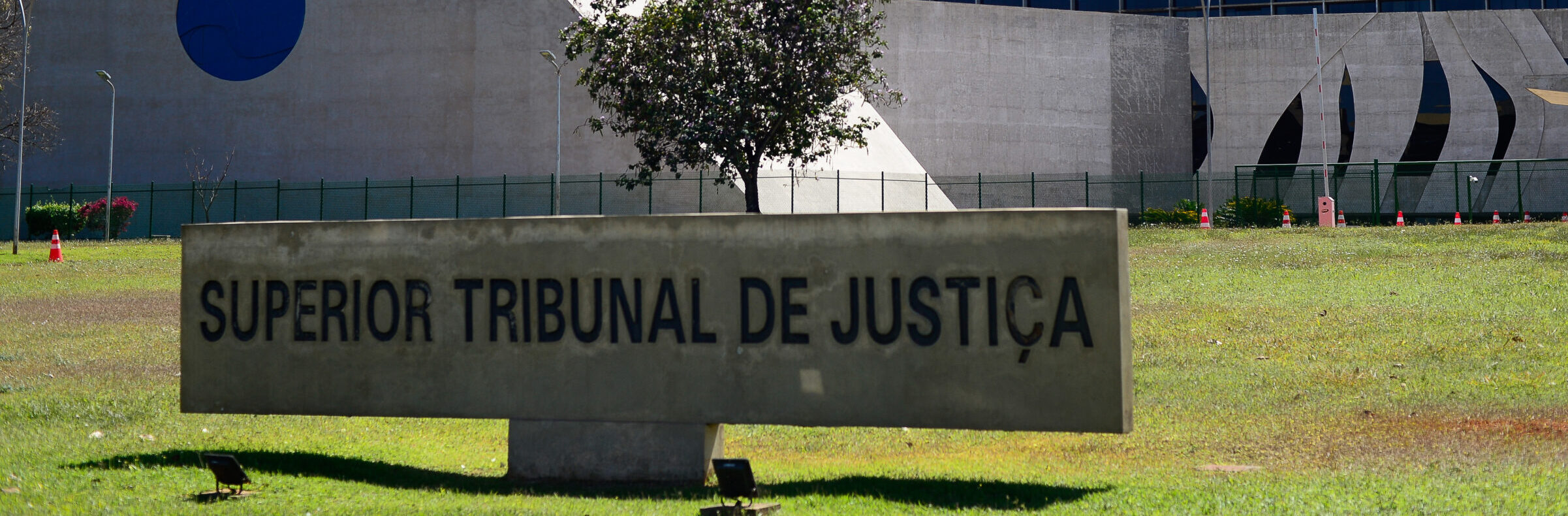
The First Section of the Superior Court of Justice (STJ) will rule, with repetitive effect, on whether taxpayers who received amounts from the Public Treasury, adjusted by the Reference Rate (TR), would be entitled to a supplement. This is because, in 2017, the Supreme Federal Court (STF), in a case with general repercussions, considered the TR unconstitutional (Theme 810) and determined the application of another correction index.
The issue will be analyzed in a repetitive appeal because a large volume of cases has been reaching the court. Until the beginning of this year, in addition to a decision by the First Panel, the Superior Court of Justice (STJ) had registered more than 430 monocratic (individual) decisions on the matter (Topic 1,426). A decision in a repetitive appeal will guide judges in state courts and tribunals across the country.
In 2017, the Supreme Court ruled that these amounts should be adjusted with "the same default interest rates that the Public Treasury uses to remunerate its tax credits, in accordance with the constitutional principle of equality.".
Following the decision on Topic 905 by the Superior Court of Justice (STJ) in 2018, complementing the Supreme Federal Court's (STF) ruling, the National Consumer Price Index (INPC), the Broad National Consumer Price Index – Special (IPCA-E), or other inflation indices became applicable. After Constitutional Amendment (EC) No. 113 in 2021, it also became possible to adopt the SELIC rate.
In 2023, however, the Supreme Federal Court (STF) ruled on the matter unfavorably to taxpayers. The justices understood that, in non-tax-related judgments, the savings account correction index (equivalent to the TR) is applicable, even in cases where there was a final and unappealable decision determining correction by another index (Topic 1,170).
Since then, there has been an increase in the volume of appeals in the courts and the Superior Court of Justice (STJ) seeking to collect these differences. The Attorney General's Office for the National Treasury (PGFN) has not yet decided whether to join the litigation, nor has it calculated the economic impact of this case. However, experts consulted by Valor estimate that it will be quite significant and possibly amount to billions of dollars if the STJ does not restrict the supplementary payments.
According to lawyer Mariana Carvalho, from the law firm Mariana Carvalho Advogados, the discussion has the potential for national reach and billion-dollar repercussions. "In practice, any citizen or company that has won a lawsuit against the State and received amounts updated by the TR (Reference Rate) could be impacted by the outcome of this judgment," she says.
According to her, there are relevant legal grounds to justify supplementing the amounts for those who have already received sums calculated using the TR (Reference Rate). "Monetary correction does not represent a gain for the creditor; it only serves to preserve the real value of the credit over time," she states. "But if the index used was subsequently deemed unconstitutional for failing to fulfill this function, it is reasonable to argue that the payment made based on the TR did not fully compensate for the inflationary loss suffered."“
On the other hand, he adds, allowing supplementation would violate important principles of legal certainty and the formation of res judicata, "since it would be necessary to review criteria already established in concluded judicial decisions.".
Jerônimo Nogueira, a partner at Nogueira Grieco Advogados, believes that the most reasonable position for the Superior Court of Justice (STJ) would be to ensure the right to compensation only in cases where the taxpayers themselves have already reserved the right to dispute the application of the TR (Reference Rate), when the Supreme Court was debating the issue between 2009 and 2017.
“For someone who didn’t say anything at the time, it seemed like they agreed with the decision. Now, I understand that there was preclusion; the party lost the right to plead at the appropriate time,” says Nogueira. “After the execution ended, the debt has already been paid; it makes no sense to have that right.”
Ariane Guimarães, a partner at Mattos Filho, explains that, in theory, anyone with a favorable judgment against any Public Treasury entity can be covered by this decision. "What should be excluded are only cases where the enforcement phase of the judgment has already become final [which only happens after the action itself has also become final]."“
According to the lawyer, compensation should be authorized without restrictions, whether or not a prior refund request has been made, respecting only the five-year statute of limitations. "Debt updating is a matter of public order," she states. "Therefore, there should be no procedural limitation to prevent the taxpayer from seeking their rights – at most, the statute of limitations."“
Contacted by Valor, the National Social Security Institute (INSS), which is a party to the lawsuits, did not comment.
Source: Economic Value