
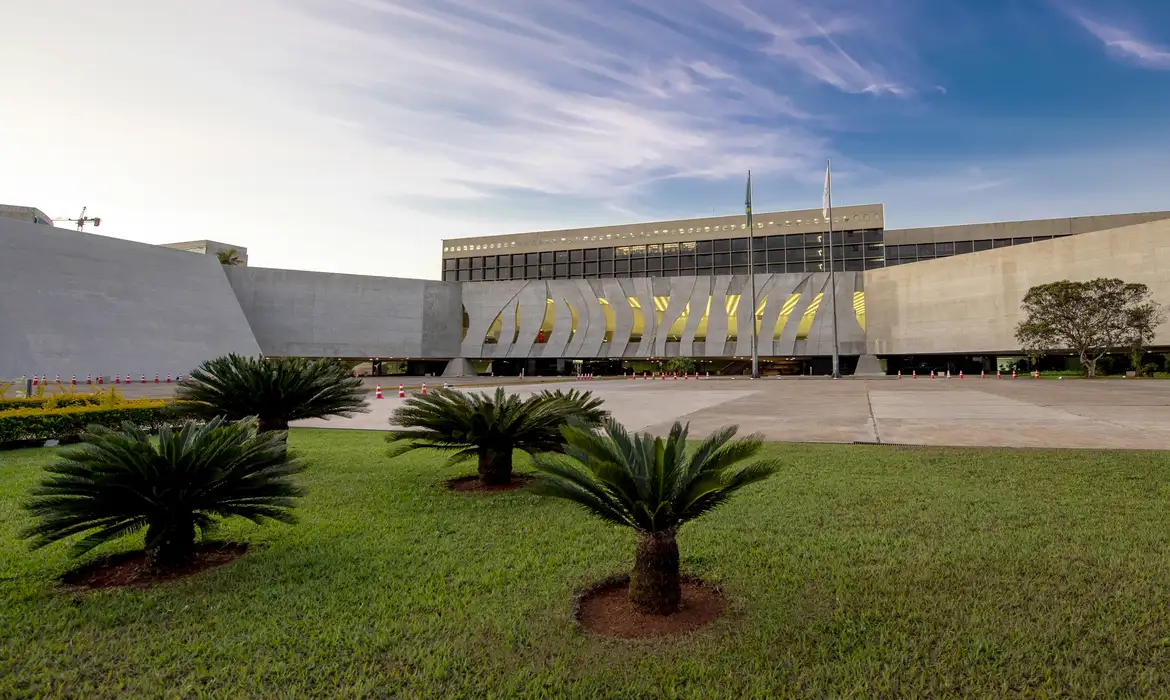
The Superior Court of Justice (STJ) has ruled that the ICMS differential tax rate (Difal) should be excluded from the calculation base of PIS and Cofins taxes. This understanding was established through repetitive appeals and must be followed by lower courts. The estimated impact on public coffers is R$7.8 billion.
The ministers of the 1st Section discussed yesterday whether they could apply to the DIFAL (Differential Tax) the understanding adopted by the Supreme Federal Court (STF) in the judgment of the "thesis of the century" (Theme 69) – the exclusion of ICMS (Tax on Circulation of Goods and Services) from the calculation of PIS (Social Integration Program) and Cofins (Contribution to Social Security Financing). DIFAL is used in interstate transactions to divide the revenue between the state of origin of the company and the state of the consumer.
The understanding of the rapporteur, Minister Gurgel de Faria, prevailed in the judgment. He explained that ICMS is a single tax, and that Difal is only an addition made to the ICMS itself "for the purpose of specific distribution between States in interstate transactions destined for non-taxpayers".
The understanding was unanimous in the collegiate body. Even the Attorney General's Office for the National Treasury (PGFN) argued, in oral presentation, that this is already the understanding adopted by the Union. Attorney Leonardo Quintas Furtado mentioned Opinion SEI No. 71, of 2025. The rule, issued by the Ministry of Finance, exempts attorneys from appealing in proceedings, understanding that "there is no normative distinction between ICMS (internal operations) and ICMS-Difal, given that both are part of the value of the product and their values do not enter the company's cash flow as new revenue.".
The Treasury Department only requested that the modulation determined by the Supreme Federal Court (STF) in the judgment of Topic 69 be applied, a request that was granted by the Superior Court of Justice (STJ). The rapporteur determined that the effects should occur from March 15, 2017, except for lawsuits and administrative procedures underway before that date.
The understanding was already predominant in the two panels that judge tax issues at the STJ (Superior Court of Justice). The 1st Panel, when judging the appeal of a technology company, had already defined that the ICMS-Difal (Differential ICMS) “is a mere calculation system for a single tax – the ICMS – with identical material, spatial, temporal and personal aspects, differing only quantitatively, more precisely, regarding the increase in the tax rate to be considered for calculating the amount due by the taxpayer and the subsequent allocation of the respective proceeds of the collection” (REsp 2128785).
The Second Panel judged a taxpayer's appeal in the same way, overturning a ruling by the Federal Regional Court of the 4th Region (TRF-4). "The ICMS-Difal, although possessing a specific calculation and sharing system between the states of origin and destination (article 155, paragraph 2, items VII and VIII, of the Federal Constitution of 1988, as amended by Constitutional Amendment 87/2015), does not lose its legal nature as ICMS," states the ruling (REsp 2183080).
Despite the already consolidated understanding, there were still decisions in the second instance denying the taxpayers' requests. The cases brought to the STJ (Superior Court of Justice) were unfavorable decisions from the TRF (Regional Federal Court) of the 2nd Region (Rio de Janeiro and Espírito Santo); the 3rd Region (São Paulo and Mato Grosso do Sul); and the 4th Region (Paraná, Santa Catarina and Rio Grande do Sul). Therefore, the topic was selected as repetitive (Topic 1372 – REsp 2174178, REsp 2181166 and REsp 2191532).
The ruling established by the 1st Section should have a greater impact on companies with a high volume of interstate sales to consumers – such as digital retail – explains Cristiane Tamy Herrera, partner at Sanmahe Advogados. “The decision represents an opportunity to optimize the tax burden and recover credits, with positive effects on cash flow and company results,” she states. “The understanding also contributes to increasing tax predictability, an essential factor for decision-making and business planning.”
Eduardo Argimon, from Argimon e Michelon Advogados, defended the taxpayer in one of the cases judged by the 1st Section and says that the understanding came at the right time, since from 2027 onwards PIS and Cofins will be replaced by CBS. "It's worthwhile to do this survey [of social contribution credits] until December 2026," he advises.
According to him, the result was not surprising. “Difal is nothing more than the ICMS itself charged in interstate transactions. If the Supreme Court, in the thesis of the century (Theme 69), defined that ICMS does not form part of the base of PIS and Cofins because it is merely an inflow that passes through accounting, without representing revenue, there would be no coherence in treating Difal differently.
Marciel Maliseski Júnior, a partner at Böni Ventura Advogados and representing another taxpayer in a separate case judged as repetitive, adds that maintaining the logic of rulings between the Supreme Federal Court (STF) and the Superior Court of Justice (STJ) "is very favorable to the taxpayer and the country's business environment." He also highlights the agreement of the National Treasury even before the ruling on the matter, which provides "a lot of peace of mind" for the e-commerce sector to price its products.
Priscila Regina de Souza, a tax partner at Loeser e Hadad Advogados, says the decision was expected, consolidating the legal nature of ICMS-Difal and aligning with the Supreme Court's understanding in the "thesis of the century." "However, the modulation of effects, starting on March 15, 2017, limits the recovery of prior credits only to ongoing lawsuits, restricting financial benefits for companies without a dispute on the matter."“
Source: Economic Value