
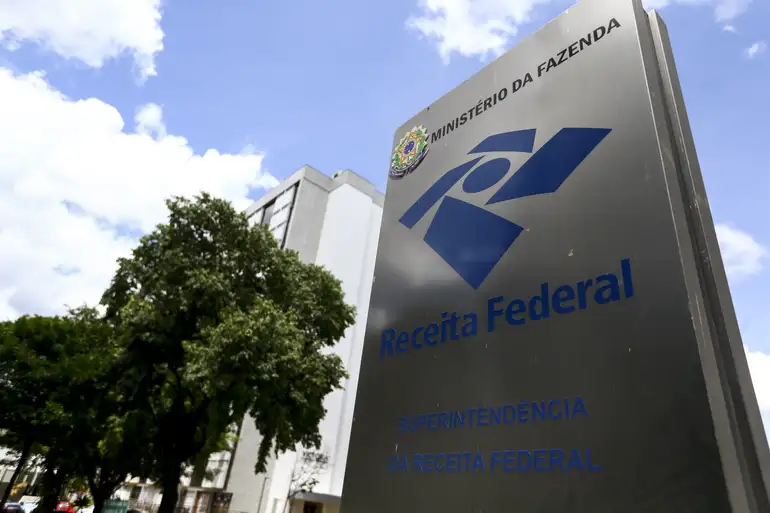
The Brazilian Federal Revenue Service has clarified in a new regulation the rules for the exclusion of fines on taxes owed after a taxpayer's defeat in the Administrative Council of Tax Appeals (Carf) by a tie-breaking vote – cast by the president of the panel, who is a representative of the Treasury. Normative Instruction (IN) No. 2,310 maintains the benefit for companies that are subject to the enactment of Law No. 14,689 of 2023, which addresses the issue.
In practice, the benefit of waiving the fine now expressly applies to cases where penalties were imposed before April 14, 2020, and which, as of September 20, 2023, were pending judgment on the merits in a Regional Federal Court (TRF), explains Gabriela Martins Silveira, tax lawyer at ALMA Law.
When the tie-breaking vote was reinstated in 2023, Law No. 14,689 stipulated that, after a defeat in the CARF (Administrative Council of Tax Appeals), a taxpayer who expressed interest in paying the tax within 90 days of the judgment would not have to pay the penalties levied on the amount due. The tax representation for criminal purposes would also be cancelled.
In 2024, the Brazilian Federal Revenue Service issued Normative Instruction No. 2,205, which introduced restrictions not foreseen in the law. Among them, it determined that the discount did not apply to isolated, late payment, and customs fines. The regulation also excluded the application of the more favorable rules to cases dealing with tax liability or concerning the existence of tax credits and statute of limitations.
The IN also restricted the discount on fines by stating that it did not apply to cases definitively judged before January 12, 2023. "The clear objective was to prevent its application to cases already definitively judged, maintaining the benefit only for cases judged after the established cutoff date," says lawyer Maria Andréia dos Santos, partner at Sanmahe Advogados.
Now, IN 2.310 adds a paragraph to article 4 of the 2024 regulation. This measure was deemed necessary because the tie-breaking vote in favor of the Treasury ceased to be effective between 2020 and 2023, a period during which Law No. 13.988, enacted in 2020, was in force. During this interval, in the event of a tie in the CARF (Administrative Council of Tax Appeals), the taxpayer prevailed.
What the new instruction from the Revenue Service does is ensure that taxpayers who lost a case at the Administrative Council of Tax Appeals (CARF) before the enactment of Law No. 13,988, and who had an open case in the Judiciary until Law No. 14,689, which reinstated the tie-breaker in favor of the Tax Authority, can also benefit from the exclusion of fines if they decide to pay the tax due.
The impact of the new IN will be positive, mainly for large taxpayers with cases concerning controversial legal theories, says João Colussi, partner at Mattos Filho. He highlights, for example, the discussion about the amortization of goodwill. In this area, taxpayers suffered significant defeats at the CARF (Administrative Council of Tax Appeals), he says, between 2015 and 2020.
“The decisions favorable to taxpayers were overturned in the Superior Chamber [of CARF] by a tie-breaking vote, the taxpayers went to court and are now managing to reverse them. There are approximately R$ 100 billion under discussion,” he states.
Especially considering that the 2024 IN (Normative Instruction) excluded cases definitively judged before January 2023, the new rule opens an important loophole, states Maria Andréia dos Santos. "Ultimately, this is the application of the principle of benign retroactivity, and the new rules on waiving fines are applicable to cases not yet definitively decided in the Judiciary, which is beneficial for taxpayers in such a situation."“
Contacted by Valor, the Revenue Service clarified that the measure will not impact revenue collection. This is because the new exception only adapts the 2024 IN (Normative Instruction) to article 15 of Law No. 14,689. The provision states that the exclusion of the fine "applies even to cases already judged by the CARF (Administrative Council of Tax Appeals) and still pending merit review by the Regional Federal Court on the date of publication of this law.".
“"The measure promotes legal certainty and reduces litigation, avoiding unnecessary legal disputes over the application of the law, which generates procedural savings and efficiency of the public administration," says the Revenue Service in a statement.
However, it remains unclear whether a definitive decision is necessary to grant the benefit, says Colussi. It is unknown whether there is a right to the exclusion of fines when a decision by a tie-breaking vote of the ordinary panel is upheld by a majority in the Superior Chamber. This issue has been debated in the Judiciary, adds the expert.
Also open to question, according to Tadeu Negromente, partner at Rolim, Goulart, Cardoso, is the fact that the IN maintains the restriction on the Revenue Service to cases judged by a tie-breaking vote before January 14, 2020, that are still pending judgment on the merits.
Source: Economic Value