
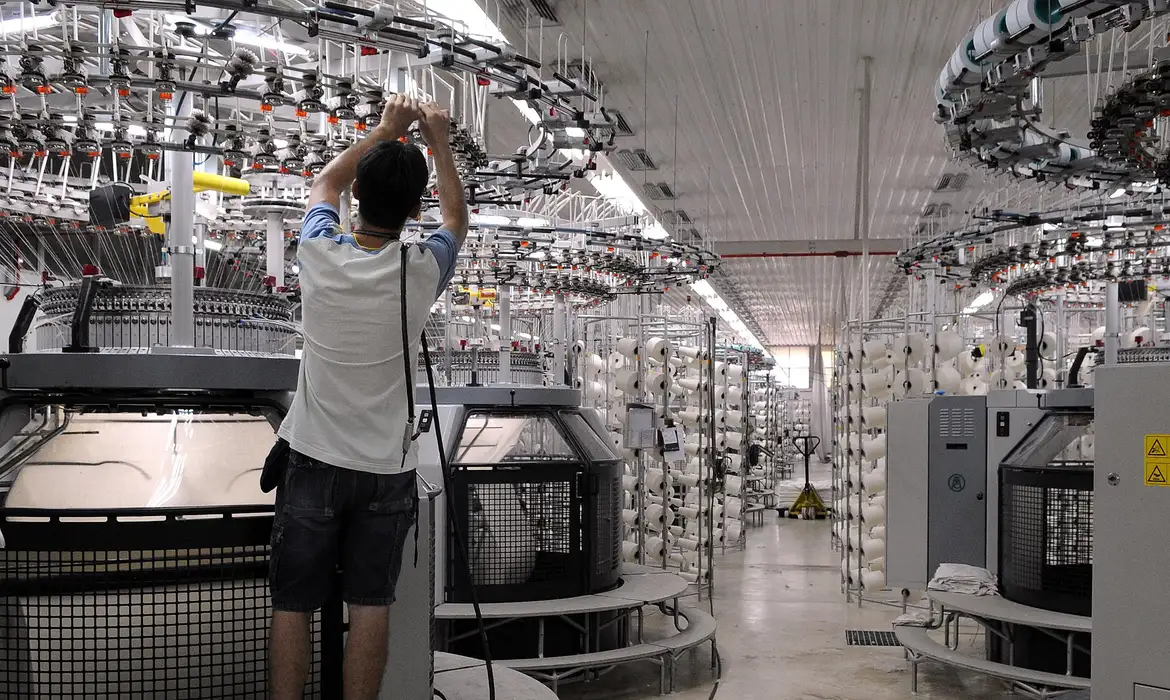
A new regulation will provide a list of products that, even after the tax reform, will continue to be subject to the Tax on Industrialized Products (IPI). The list, confirmed by the Ministry of Finance, is highly anticipated because the tax rate will be zeroed for the vast majority of products starting in 2027. The IPI will be maintained only for 5% of the items currently taxed, according to Valor.
The definition of the products is in an advanced stage of study, according to the Ministry of Finance. “We have the task of finalizing the studies to identify the products that will continue to be subject to IPI (Tax on Industrialized Products). It's a small list, basically products manufactured in the Manaus Free Trade Zone and similar products. We are very advanced in our studies and now we will focus our energy on finishing and publishing this list as soon as possible. And all the others will have a zero IPI rate,” explained Roni Peterson, Program Manager at the Federal Revenue Service, recently during the launch of the regulations for the Contribution and the Tax on Goods and Services (CBS and IBS, respectively).
According to him, the IPI legislation will be revised so that "the vast majority of Brazilian companies forget that the IPI exists, because there will be neither credit on input nor debit on output." "The intention is that it will only remain for companies that, in some way, either pay the IPI on output or have credit to later use in the payment of output," Peterson stated.
The tax reform already stipulated that the IPI (Tax on Industrialized Products) would be maintained for products competing with those from the Manaus Free Trade Zone that are produced in other regions of Brazil or imported. There is anticipation among tax professionals regarding the list, to ascertain whether only these products will continue to be subject to IPI or if there will be any surprises.
For those who work with pricing products subject to IPI (Brazilian tax on industrialized products) and who compete with items from the Manaus Free Trade Zone, the list is eagerly awaited for price setting, according to tax lawyer Lia Drezza, from the Sanmahe Advogados law firm.
“The reduction to zero will not particularly affect information and communication technology goods, which are governed by the Informatics Law [Law No. 8,248 of 1991]. They are likely to become more expensive,” she estimates. According to the lawyer, the complementary laws regulating the tax reform were silent regarding the use of IPI credits.
According to Thiago Spressão, partner at Loria Advogados, there are some criteria that companies can already use to understand which products will be subject to the IPI (Tax on Industrialized Products): if the item was manufactured in the Manaus Free Trade Zone in 2024 and had a tax rate equal to or less than 6.5% in December 2023 and a project approved by the Superintendency of the Manaus Free Trade Zone (Suframa) before the publication of Complementary Law No. 214. This law, published in January 2025, established the IBS (Tax on Goods and Services), the CBS (Contribution on Goods and Services), and the Selective Tax, and created the IBS Management Committee.
“There are three requirements to continue receiving the IPI tax; if one of them is not met, the tax is lost,” explains the tax expert. Despite this, the lawyer believes there will be uncertainty if a definitive list is not published. In the meantime, each company can investigate whether its production meets these criteria and whether it has any competitors producing in the Manaus Free Trade Zone.
Brazilian law stipulates that information technology goods do not need to meet these requirements for the IPI (Tax on Industrialized Products) to remain in effect; in other words, it will continue to apply to items such as cell phones, computers, and tablets, according to Spressão, with the aim of maintaining the competitiveness of a sector that already had a reduced IPI. The lawyer estimates that the IPI could affect the production of automotive parts, plastic packaging, and electronics.
The lawyer states that the list is not mandatory, but if it is not published it could cause harm to the government itself. According to the tax expert, without the list, if a company is certain that its product does not meet the requirements, it may fail to pay the tax, impacting revenue collection and creating uncertainty, as well as potential litigation.
“This list needs to be published more for security reasons than for validation. The IPI [Tax on Industrialized Products] ends with or without the list,” he says, adding that “the tax will maintain its extra-fiscal purpose.” The tax expert points out that, in specific situations, the government could increase the IPI by up to 30%. “There is a great risk of this instrument being used for revenue-raising purposes.”
However, according to the lawyer, with the tax reform, a large part of the discussions that existed in the courts regarding the IPI (Tax on Industrialized Products) tend not to be repeated. An important part had already been resolved by the higher courts, such as the possibility of taking credits from acquisitions in the Manaus Free Trade Zone and the maintenance of credits even when the taxpayer has exempt, immune, or zero-rated output.
Furthermore, he adds, there are issues that have been resolved by the courts and lose their applicability under the new regime, such as the non-taxation by PIS/Cofins of presumed IPI credits given to exporters. But others, even having been resolved, he points out, could be revived with new arguments, such as the case of the exclusion of IBS and CBS from the IPI tax base.
Taxpayers lost their case in the Superior Court of Justice (STJ) regarding the exclusion of ICMS, PIS, and Cofins from the IPI tax base. The decision considers these amounts to be part of the "value of the transaction," but with the replacement of PIS and Cofins by CBS and ICMS by IBS, according to the lawyer, the discussion may be reopened based on new arguments, especially those based on the calculation system outside of the new taxes (IBS and CBS).
Source: Economic Value