
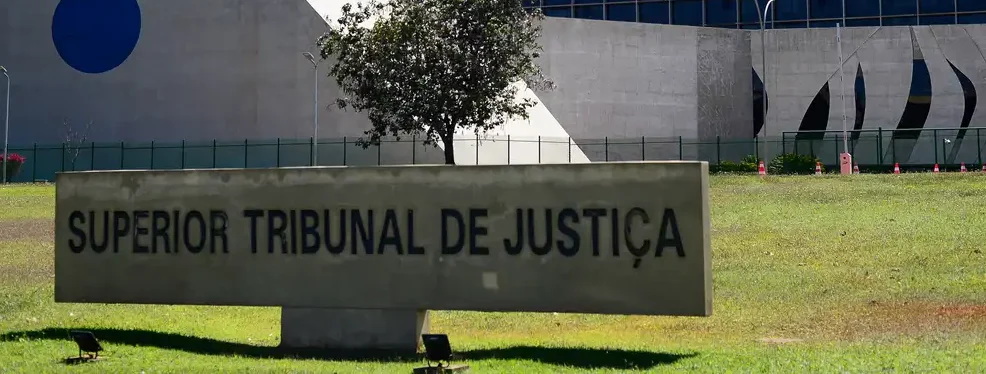
The Superior Court of Justice (STJ) may rule on repetitive cases involving the application of PIS/Cofins taxes on bonuses and discounts in retail, presumed profit in IRPJ and CSLL for energy concessionaires, and ICMS tax credits on fuels, among other tax disputes. These issues are currently listed as representative cases of controversy, which may later be analyzed as repetitive cases and have a legal precedent established and binding on the judicial and administrative tax instances.
Currently, there are seven tax-related controversies under review by ministers. According to the Internal Regulations of the Superior Court of Justice (STJ), after the president of the Precedents Committee dispatches the appeal indicated as representative of the controversy, the rapporteur has a period of 60 working days, from the receipt of the case, to rule on its classification as a repetitive case.
Since most of the cases were nominated between November and December 2025, the decision on whether to convert the topic into a repetitive case should be published in the first half of 2026, after the Judiciary's recess. In all cases, the presiding ministers of the Precedent Management Committee — Moura Ribeiro and, now, Sérgio Kukina — report a multiplicity of cases and significant divergence in the courts, which justifies the possible referral.
Repetitive cases have been a major priority for the STJ Sections, which together judged 79 of them in 2025, a record in court. In the specialized panel on Public Law, 47 repetitive cases were analyzed, including 14 tax-related cases. This trend is expected to continue in 2026, now under the presidency of Minister Gurgel de Faria, who is familiar with tax issues.
Bonuses and discounts in retail and the basis for PIS/Cofins taxes.
One of the most widely discussed topics is the one that addresses the concept of revenue for the purposes of PIS/Cofins taxation in the retail sector, especially in relation to bonuses and discounts granted by suppliers. Controversy 786 The case revolves around Laws 10.637/2002 and 10.833/2003, regarding the non-cumulative nature of contributions. The rapporteur is Minister Afrânio Vilela.
To the JOTA, Luiz Eduardo Costa Lucas, a partner at Martinelli Advogados, explained that the bonuses and discounts discussed in the controversy may have two origins, both related to the moment of negotiation with suppliers. The first concerns discounts granted directly on the negotiated price, such as when a supplier reduces the value of a batch due to the regularity of the commercial relationship. The second involves so-called merchandise bonuses, in which the supplier delivers a larger quantity of products for the originally agreed price, such as the supply of additional items at no extra cost.
According to the Brazilian Federal Revenue Service, both discounts granted and bonuses in goods should be understood as elements that increase the company's revenue, forming part of the calculation base for PIS and COFINS taxes. Taxpayers, however, argue that these operations do not constitute revenue, as they only reflect the result of the commercial negotiation, carried out before the financial inflow and the issuance of the invoice. In this understanding, only the amount actually paid would represent taxable operating revenue.
There are conflicting precedents among the public law panels of the Court regarding this issue. The First Panel of the Superior Court of Justice (STJ) has been adopting a position favorable to the taxpayer, arguing that bonuses and discounts do not constitute revenue, but merely a reduction in the cost of acquisition, and should not be included in the tax base for contributions. This position was reaffirmed in... AgInt in REsp 2205558/SC, reported by Minister Sérgio Kukina. The 2nd Panel decided in REsp 2090134/RS since bonuses function as indirect compensation, even when paid as an offset or discount, the court considered that taxes apply.
According to Costa Lucas's assessment, the understanding of the 2nd Panel tends to prevail if the ministers maintain the same votes, especially due to Faria's move to the presidency of the panel. Even so, there is a possibility of a change in position during the judgment by the 1st Section.
Presumed profit in Corporate Income Tax (IRPJ) and Social Contribution on Net Profit (CSLL) for energy concessionaires.
Another relevant topic is... Controversy 779, This concerns the percentage of presumed profit applicable to electricity transmission concessionaires for the purposes of Corporate Income Tax (IRPJ) and Social Contribution on Net Profit (CSLL) under the presumed profit regime. The discussion, under the rapporteurship of Minister Maria Thereza de Assis Moura, involves the application of Article 15 of Law 9.249/1995, which provides for a presumption of 32% for the provision of construction and infrastructure services linked to the concession of public service.
The First Panel of the Superior Court of Justice (STJ) has a consolidated understanding that transmission concessionaires do not qualify as construction companies, since the construction of infrastructure is an intermediate activity, necessary for the provision of the transmission service, and not the final activity. In this scenario, the general percentages of 8% for Corporate Income Tax (IRPJ) and 12% for Social Contribution on Net Profit (CSLL) have been applied, as decided in... REsp 2179978/SP, reported by Minister Paulo Sérgio Domingues.
However, in a single-judge decision, Minister Francisco Falcão, of the 2nd Panel, decided otherwise. AREsp 2211982/RJ. According to him, the reduced percentages of presumed profit (8% IRPJ and 12% CSLL) do not apply to revenues from infrastructure works carried out by energy transmission concessionaires when they are linked to the public service concession contract.
The National Treasury agrees with the selection of the appeal as representative, while the taxpayer argues that there are particularities in the specific case that would negate the procedural requirements.
Presumed ICMS credit and tax base for IRPJ and CSLL.
The discussion regarding the inclusion of presumed ICMS credit in the calculation basis for IRPJ and CSLL, which is the subject of [the relevant legislation], may also be affected by its repetitive nature. Controversy 576. The debate revolves around the legal nature of these credits granted by the States as a tax incentive: whether they represent taxable profit or increase in net worth, or whether they constitute a state tax benefit that cannot be reached by federal taxes. The rapporteur is Minister Regina Helena Costa.
In this specific case, the Attorney General's Office and the National Treasury are advocating for the appeal to be subject to the repetitive appeals procedure. The taxpayer, in turn, objected, arguing that the appealed decision is aligned with the jurisprudence of the Superior Court of Justice (STJ).
In Topic 1182, the panel decided that it is not possible to exclude tax benefits related to ICMS (Brazilian state sales tax) from the IRPJ (Brazilian corporate income tax) and CSLL (Brazilian social contribution on net profit) calculation base, except when the legal requirements are met, especially those provided for in article 30 of Law 12.973/2014, which only requires the exclusion of subsidy revenue from taxable income and its registration in a profit reserve, without imposing additional accounting conditions or the need for the amounts to pass through the income statement.
Meanwhile, the Supreme Federal Court (STF) has scheduled the resumption of the trial of RE 835818 for February 25 (Topic 843), which deals with the inclusion of presumed ICMS credits in the calculation basis of PIS and Cofins, with a risk calculated at R$ 16.5 billion in case of loss for the Union.
ICMS tax credit on fuels used in own fleet.
Another issue with a strong impact on the productive sector concerns the right to ICMS (Brazilian state sales tax) credits on the acquisition of fuels, lubricants, tires, and spare parts used in a company's own fleet, when transportation is an ancillary activity of the company. Controversy 771 This involves defining what can be considered an essential input, as opposed to the category of goods for use and consumption.
Although state courts, such as that of Santa Catarina, have denied the credit arguing that transportation is not the taxpayer's core business, recent decisions in the Superior Court of Justice (STJ) point to a favorable trend for companies. In a monocratic decision issued in May 2025 in the AREsp 2860580/SC, Minister Afrânio Vilela recognized the right to ICMS credits for a company whose main activity was the industrialization and commercialization of products, and not the transportation of goods.
Dental services and reduced corporate income tax and social contribution rates.
The Superior Court of Justice (STJ) is evaluating whether dental services can be equated to hospital services for the purposes of applying reduced corporate income tax (IRPJ) and social contribution on net profit (CSLL) rates under the presumed profit regime.
O Topic 217 The precedent set by the Supreme Court established that the concept of hospital services should be interpreted objectively, considering only the activities carried out by hospitals, excluding common medical consultations. In the current controversy, the justices must define the scope of the issue in relation to dental activities, determining whether—and under what conditions—such services can be considered hospital services.
Furthermore, more recent single-judge decisions from the panels of the 1st Section indicate that dental procedures involving surgical interventions may fall under this concept, allowing for preferential taxation. Examples include... AREsp 2735489/PR, from the 1st Panel, and the AREsp 2830612/SP, from the 2nd Panel.
The Union opposes the allocation of the appeal, alleging a lack of admissibility requirements and the regional nature of the matter. Controversy 761, Meanwhile, the Attorney General's Office and taxpayers defend the selection process. The case is being handled by Justice Teodoro Silva Santos.
Statute of limitations for offsetting tax credits
The panel also analyzes the Controversy 756 Regarding the five-year statute of limitations for offsetting judicially recognized tax credits, as stipulated in article 168 of the National Tax Code (CTN), the discussion revolves around two central points: whether the time limit refers to the beginning of the offsetting process or its complete conclusion, and whether an administrative request for credit authorization suspends the statute of limitations.
The jurisprudence of the Superior Court of Justice (STJ) has been favorable to taxpayers, in the sense that it is sufficient to initiate the compensation within the deadline, and that the application for authorization suspends the statute of limitations. Despite this, the National Treasury seeks to establish a more restrictive interpretation, requiring the complete conclusion of the compensation within the deadline. The matter is under the purview of Justice Teodoro Silva Santos.
Cofins-Import and aircraft
Finally, the application of the 1% COFINS-Importation surcharge on import and re-import operations of aircraft and their parts and components is under discussion, as per Article 8 of Law 10865/2004. The rapporteur is Minister Gurgel de Faria. On this point, the 1st Section of the STJ (Superior Court of Justice) already has a consolidated understanding in favor of the application of the surcharge, as decided in... EREsp 1926749/MG, reported by Minister Afrânio Vilela. Even so, the multiplicity of cases led to the selection of the appeal as representative of Controversy 777.
Source: www.jota.info