
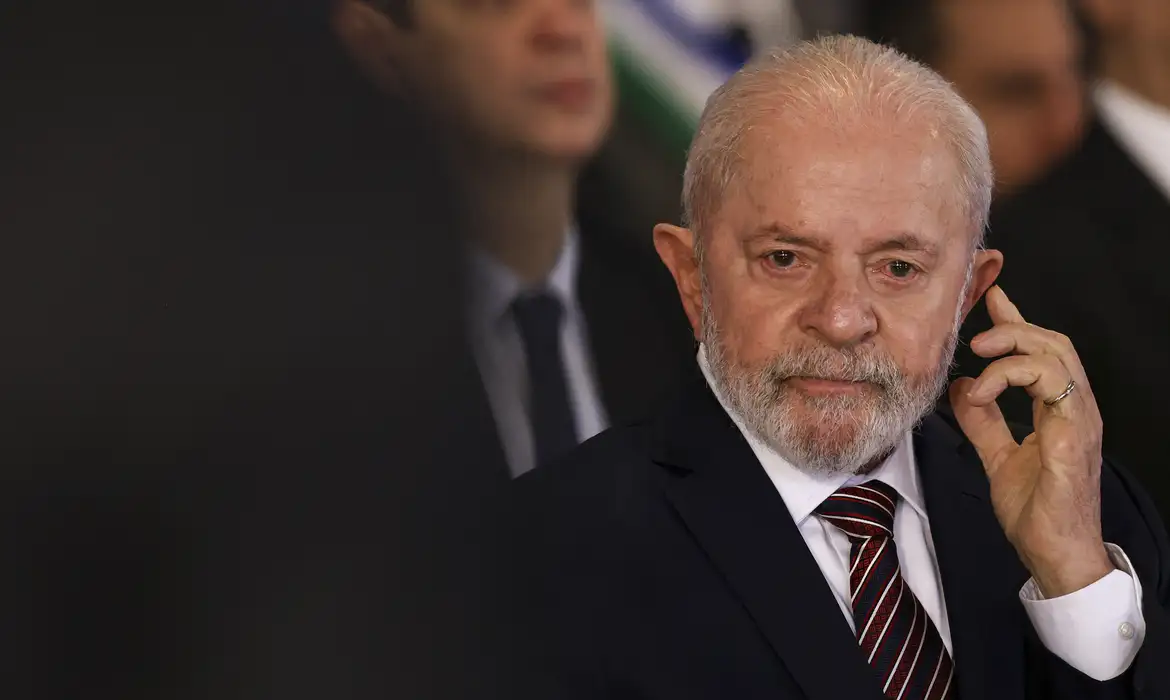
President Lula (PT) sanctioned, this Tuesday (January 13th), the second phase of the regulation of the tax reform, which establishes the Management Committee of the Tax on Goods and Services (CGIBS) and defines the administrative structure responsible for judging the tax. In total, ten provisions were vetoed from the text, whose publication in the Official Gazette of the Union (DOU).
One of the vetoes concerns the reduced IBS and CBS tax rate, at a percentage of 60%, which would apply to "natural liquid foods produced from vegetables, cereals, fruits, legumes, oilseeds and tubers". The provision is found in article 174, in the part that amends item 2 of Annex VII of Complementary Law 214/25. According to the Treasury, the definition was too broad and it was not clear which beverages would be affected by the benefit. Thus, to avoid litigation, the passage was removed. The veto, therefore, restricts the benefit to fermented milk, beverages and dairy compounds.
The taxation of beverages generated significant mobilization in Congress. During the legislative process, there was also unsuccessful pressure to limit the Selective Tax on sugary drinks. This tax is aimed at products that are harmful to health or the environment.
Soccer
The president partially vetoed the reduction in tax rates approved by Congress for publicly traded football companies (SAF). The approved text provided for a cut from 4% to 3% in the rate of unified federal taxes (IRPJ, CSLL and contributions), which was reversed. On the other hand, the reduction from 1.5% to 1% in the CBS rate and from 3% to 1% in the IBS rate was maintained. Thus, a tax burden of 6% is projected, considering all these taxes.
Also vetoed was the section that stipulated that revenue from the transfer of athletes' sporting rights and the transfer of an athlete to another team would not be included in the calculation base for monthly payments during the first five calendar years of the SAF's (Sociedade Anônima do Futebol - Football Corporation) formation.
In a third veto on the subject, Lula cut the equalization of taxation of all operations related to sporting activities to the Specific Football Taxation Regime (TEF). The economic team's understanding was that the regime included other taxes, in addition to the CBS and IBS, which could have reduced rates, such as IRPJ and CSLL.
Loyalty points
The section that defined that loyalty program points granted free of charge would be included in the tax base was vetoed. Therefore, the points will not be included in the tax base. This refers to article 174, specifically the part that amended paragraphs 3 and 4, III, of article 12 of Complementary Law 214.
Cashback
Also vetoed, in the public interest, was the provision that allowed the postponement of cashback when the transaction was taxed in a single-phase manner. The understanding of some ministries in the Esplanade of Ministries was that this could create incompatibility with other cashback modalities (energy, electricity, and sanitation). The measure was foreseen in article 174, in the part that includes paragraph 5 of article 116 of Complementary Law 214.
Other vetoes
João Nobre, advisor to the Executive Secretariat of the Ministry of Finance, explained that most of the changes are related to article 174, which deals with Complementary Law 214/25. The only vetoes that are not in this rule affect article 5, paragraph 5, and article 165, in the part that includes article 35-A in the National Tax Code (CTN).
The first provisions address state and municipal competencies and, according to Nobre, fulfill a request made by the representative entities of states and municipalities, Comsefaz and the National Front of Mayors. “The first one established, through complementary law, the competencies of state, district, and municipal legislation as of December 20, 2023. Therefore, it was understood that this provision was 'freezing' and fixing the competencies of state, municipal, and district legislation in federal complementary law,‘ he explained.
Regarding the second provision, which deals with the triggering event for ITBI (Property Transfer Tax), Nobre stated that the request was made specifically by the National Front of Mayors, considering that "today there is a divergence among several municipalities regarding this moment [of the triggering event]".
“"Since the supplementary law offered an alternative and stated 'it will be at such and such a time,' but, at the taxpayer's option, it could be brought forward, the mayors understood that, given the significant differences between various municipalities, it would be better if this rule were not enshrined in the National Tax Code," he stated.
Manaus Free Trade Zone
The only change related to the Manaus Free Trade Zone will be the veto, in article 174, of the part that includes paragraph 3 in article 327-A of LC 214. This section established the competence of the Board of Directors of Suframa to deal with incidents of verification by tax authorities regarding the basic production process in the Manaus Free Trade Zone and in the Free Trade Areas.
Simulation concept
Lula also vetoed, in article 174, the section that amends article 341-F, § 2, III, of LC 214. The justification was "public interest," considering the need to standardize the rules and the concept of simulation. The provision included by Congress, according to Treasury advisors, would allow for interpretations different from those already adopted by the courts and accepted in jurisprudence. The veto, therefore, aims to prevent taxpayers from having to deal with two concepts of simulation.
Digital platform
The signing of PLP 108 took place during a ceremony to launch the digital platform for the Tax Reform, held at the Federal Data Processing Service (Serpro). Through it, it will be possible to begin the testing period of the reform, allowing taxpayers and developers to run simulations on systems related to the CBS (Contribution on Goods and Services).
The platform can be accessed via the website consumo.tributos.gov.br. Starting today, taxpayers who log in using their gov.br account will have access to features that were available during the reform's pilot phase.
Among the features are:
A tax calculator that provides real-time information on the tax amount for the sale of goods or services in any city or state.;
Assisted CBS calculation, which displays all invoices for products bought and sold each month and allows the taxpayer to clearly know if they have a credit to pay or an amount to receive;
New features, such as checking cashback returns, will be available starting in the second half of the year.
The Special Secretary of the Federal Revenue Service, Robinson Barreirinhas, highlighted the benefits that taxpayers will have when using resources such as the official Federal Revenue Service calculator, which will also be available for download. "Business owners don't need to try to guess what the Federal Revenue Service's interpretation is. Their system will be fully aligned with the Revenue Service's system," he stated.
Barreirinhas further explained that, since all invoices will be linked to the platform, the system will prepare pre-filled tax returns. The taxpayer will only need to verify the data, as already happens with income tax.
Finance Minister Fernando Haddad said that storing the data in a single system will allow for a "complete snapshot of the Brazilian economy" in real time. "If Congress requests a simulation of any changes to the legislation, we will be able to deliver a report on everything that is happening," he stated.
Also participating in the event were Vice President Geraldo Alckmin (PSB); the President of the Chamber of Deputies, Hugo Motta; the rapporteur of the project in the Senate, Eduardo Braga (MDB); the rapporteur in the Chamber, Mauro Benevides (PDT); the former extraordinary secretary of the tax reform of the Ministry of Finance, Bernard Appy; the president of Serpro, Wilton Mota; and the ministers Esther Dweck (Management and Innovation), Luiz Marinho (Labor), Rui Costa (Chief of Staff), Simone Tebet (Planning) and Gleisi Hoffmann (Institutional Relations).
IBS Steering Committee
CGIBS will be responsible for standardizing the oversight of compliance with principal and ancillary tax obligations by municipalities, states, and the Federal District. It will also be in charge of standardizing IBS collection activities and administrative representation.
The body will have a Superior Council, the highest decision-making body, composed of 27 members appointed by the states and the Federal District and 27 appointed by the municipalities. The council will be headed by a president and two vice-presidents and will have, under its authority, an executive board with nine thematic directorates, a general secretariat, an ombudsman's office, an internal audit office, and an advisory office for Institutional and Interfederative Relations.
The funding for the management committee will consist of up to 0.2% of the monthly IBS (Tax on Goods and Services) revenue from each federative entity and income from financial investments of its revenues, in addition to other resources allocated to it and any other income obtained. The text also establishes that the accounting, financial, budgetary, operational, and asset oversight of the committee will be shared among the state, district, and municipal audit courts.
Administrative judgments
Regarding the administrative processes of the IBS (Brazilian VAT), the text provides for judgments in the first and second instances under the responsibility of the states and the Federal District. Each federative unit will have 27 judgment chambers, responsible for analyzing tax assessments and requests for rectification. They will be formed by two civil servants appointed by the state administration, two appointed by the municipal administrations, and a president, who will only vote in case of a tie.
In the second instance, the appeals chambers will operate, composed of four civil servants appointed by states and municipalities, four representatives of the taxpayers, and a president. There will also be 27 per federative unit. They will be responsible for judging appeals ex officio and voluntary appeals against first-instance decisions. Both the judgment chambers and the appeals chambers may be organized into panels, but the details will be defined by an act of the CGIBS.
The third instance, responsible for standardizing case law related to specific IBS legislation, will be handled by the Superior Chamber of the IBS (CSIBS). This body will consist of eight civil servants appointed by the federative units, eight taxpayer representatives, and a president.
CSIBS will judge appeals for standardization, standardization incidents, and requests for rectification. Furthermore, it will deliberate on the issuance, revision, and cancellation of binding provisions. Judgments in all three instances will be conducted virtually.
Split payment
Split payment, a mechanism for collecting taxes at the time of financial settlement of the transaction, is one of the highlights pointed out by the Tax Advisory team at ABE Advogados.
JOTA has learned that the system is in the initial development phase by Serpro and will be tested throughout the year, which will be dedicated to the system's development. Implementation is expected to begin in 2027, on an optional and gradual basis.
During the JOTA's Tax Dialogues event, tax auditor Marcos Hübner Flores, manager of the consumer reform implementation project at the Federal Revenue Service, explained that the idea is for taxpayers to be able to check whether or not they have a tax credit. The mechanism needs to be ready by 2027 for collection by the purchaser.
Tax experts explain that the system will have a standard and a simplified version, but it should be optional. "Although it modifies the method of collection, split payment does not eliminate the obligation of monthly calculation, which must consider the amounts actually received and recorded in government systems," state the lawyers from ABE Advogados. They also emphasize that the new law provides for non-tax administrative penalties related to the execution and control of IBS and CBS collection in financial settlement.
Medications
Another relevant change concerns medications eligible for the zero IBS and CBS tax rate. Instead of a fixed list, the Ministry of Finance and CGIBS will publish a list of eligible medications every 120 days. The updates will take into account statements from the Ministry of Health.
Property taxes
In addition to establishing the CGIBS and defining the structure of the IBS administrative judgment, the text promotes changes in other legislation. Eric Visini, partner at TozziniFreire Advogados, cites the provisions on the Inheritance and Gift Tax (ITCMD), especially the progressivity of the tax rate and the definition of the market value of the asset or right transferred as the tax base.
Mateus Campos, from ABE Advogados, draws attention to changes related to the Property Transfer Tax (ITBI). According to him, the proposal standardizes concepts with the aim of "avoiding normative and interpretative conflicts between different municipalities.".
Investment funds
Felipe Peralta, a tax reform specialist at the law firm Miguel Neto Advogados, highlights changes to Complementary Law 214/2025 to define the criteria for classifying Real Estate Investment Funds (FII) and Investment Funds in Agribusiness Production Chains (Fiagro) as taxpayers or non-taxpayers of the IBS and CBS.
“"The regulation [provided for in PLP 108], broadly speaking, reproduced criteria similar to those already in place for enjoying income tax exemption, which contributes to greater legal certainty for the market, by ensuring that the income distributed by these funds remains outside the scope of the new consumption taxes," he assesses.
Other changes to LC 214/25
Maria Carolina Bachur, a partner at Lobo de Rizzo Advogados, lists a series of other changes promoted by PLP 108 in LC 214/2025. Among the points that the tax lawyer considers "important adjustments for the soundness of the new tax system" are the systematization and unification of penalties applicable to IBS and CBS; the creation of new punishable offenses, such as the lack of updated registration information; the creation of a "reference tax" as a basis for calculating fines; and the "improvement" of the rules for holding digital platforms liable for taxes owed by users, among others.