
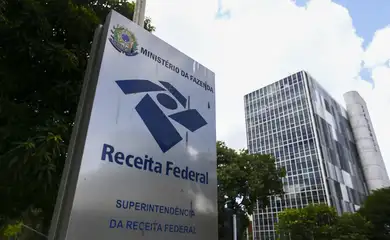
The use of existing tax documents during the transition period to the model foreseen in the tax reform, the confirmation that the declaration of the new taxes will be merely informative as long as the ancillary obligations are fulfilled, and the creation of a four-month period without penalties for non-compliance are responsible measures that organize the adaptation phase to the new regime. This is the opinion of tax experts consulted by JOTA regarding a joint act that regulated the topic this Tuesday (December 23).
The guidelines are contained in Joint Act 1/2025, from the Federal Revenue Service and the Management Committee of the Tax on Goods and Services (IBS). The regulation published in the Official Gazette of the Union (DOU) listed the ancillary obligations related to the IBS and the Contribution on Goods and Services (CBS) that must be submitted starting in January 2026, the transition year of the reform.
O Joint Act RCB/CGIBS 1/2025 It provides for the creation of the Electronic Water and Sanitation Invoice (NFAg), the Declaration of Specific Regimes (DeRE), the Electronic Invoice for the Sale of Real Estate (NF-e ABI), and the Electronic Gas Invoice (NFGas). In addition to the new tax documents, it establishes the utilization of the following existing ancillary obligations:
- Electronic Invoice (NF-e);
- Electronic Consumer Invoice (NFC-e);
- Electronic Service Invoice (NFS-e);
- Electronic Transport Document (CT-e);
- Electronic Transport Document for Other Services (CT-e OS);
- Electronic Passenger Ticket (BP-e);
- Electronic Manifest of Tax Documents (MDF-0);
- Electronic Cash Transport Guide (GTV-e);
- Electronic Electricity Bill (NF3e);
- Electronic Communication Services Invoice (NFCom);
- Electronic Content Declaration (DC-e);
- Electronic Service Invoice for Roadway Operation (NFS-e Via).
Compliance with ancillary obligations throughout 2026 will have an informative and educational effect, serving as a test for the implementation of the new tax system. According to Constitutional Amendment 132/23, the CBS will come into effect in 2027 and the IBS will be implemented gradually between 2029 and 2032.
According to the joint act, fines of 1% will not be applied to the transaction value for failure to register the IBS and CBS fields in tax documents during the three months following the publication of the common tax regulations, which is expected to occur in January 2026.
Tax experts' assessments
According to Júlio César Soares, partner at Advocacia Dias de Souza, the regulation organizes the documentary entry point for the new taxes and reinforces the idea of 2026 as a testing year, having both a "reassuring" and a "demanding" side.
“[It is] reassuring because the transition prioritizes already consolidated documents and because there is an adaptation period without penalties. [It is] demanding because the formal effective date of January 1, 2026, sets the clock ticking with resource planning, invoicing, integrations with authorizers, product and service parameterization, as well as data governance. Especially in complex chains such as logistics, energy, telecommunications, and regulated services,” he reflects.
Leonardo Andrade, a partner at ALS Advogados, also viewed the use of existing documents favorably. However, he noted that the creation of ancillary obligations could increase the complexity of the transition period, even while acknowledging their necessity for "controlling" specific activities.
André Menon, a tax partner at Machado Meyer Advogados, considers the regulation positive because it reinforces legal certainty by eliminating the application of fines for non-compliance with ancillary obligations in the first few months: "There was some doubt about the mandatory highlighting of IBS and CBS despite the fact that the postponement of the validation rule had been implemented," he explains.
Menon refers to version 1.33 of Technical Note 2025.002-RTC, The note, signed by the Federal Revenue Service and the National Meeting of State Tax Coordinators and Administrators (Encat), made filling in the IBS/CBS fields optional for issuing invoices and defined that it will not be "required by validation rules, but remains mandatory according to current legislation.".
The assessment by Felipe Peralta, a tax lawyer at Miguel Neto Advogados, follows the same line. He reinforces that there was doubt among taxpayers as to whether the absence of ancillary taxes would imply the collection of the principal amount.
“"This demonstration is a response from those responsible for managing the new taxes established by the consumption tax reform to the evident lack of detail in the tax regulations," he concludes.
Note
Despite the positive assessments, Soares draws attention to the lack of clarity in the expression "without tax effects," present in the sole paragraph of article 3. The provision establishes that the calculation of IBS and CBS will be for informational purposes only if the ancillary obligations are fulfilled.
“The problem is that the reform legislation attributes a declarative character to the information contained in the tax document, with the potential to be interpreted as an admission of the amounts consigned. Hence the importance of the common regulation explicitly defining, with precision, the scope of the expression, so that the 'trial' does not become, through interpretative shortcuts, an instrument of indirect punishment, disallowance, or premature litigation,‘ he observes.
Note from Consefaz
In a statement regarding the regulation published this Tuesday, the National Committee of Secretaries of Finance, Revenue, or Taxation of the States and the Federal District (Consefaz) highlighted the use of existing ancillary obligations and the creation of new documents.
“"This initiative is fundamental to preserving the stability of the economic environment, ensuring the continuity of productive activities, and allowing companies, accounting professionals, and public administrations to prepare, with confidence, for the full operationalization of the new tax system," the text says.